
The idea that smartphones may no longer dominate human–computer interaction within the next decade sounds extreme – until it is viewed through the lens of behavior rather than hardware. At YourNewsClub, we see this argument less as a prediction about devices and more as a statement about how intelligence is accessed. In that sense, the position articulated by John Callaghan, co-founder of True Ventures, fits a broader structural shift already underway.
Callaghan argues that within five years we will use smartphones very differently, and within ten years they may no longer function as our primary interface. This is not a claim that phones will disappear, but that they will lose their centrality. From our perspective at YourNewsClub, this distinction matters. Technologies rarely vanish outright; they are displaced when interaction costs become intolerable. Today’s smartphone demands attention, interruption, and manual input – an awkward model in a world where artificial intelligence increasingly operates continuously and contextually.
True Ventures’ investment history reinforces this logic. The firm’s most successful bets were not about superior hardware specifications, but about enabling new routines. Fitness tracking normalized daily self-measurement. Connected home security reframed vigilance as ambient rather than active. Networked exercise created accountability and community where none existed before. In each case, the device itself was secondary to the behavior it made habitual. At YourNewsClub, we consider this the most credible signal of future interfaces: they succeed when they remove friction from something humans already want to do.
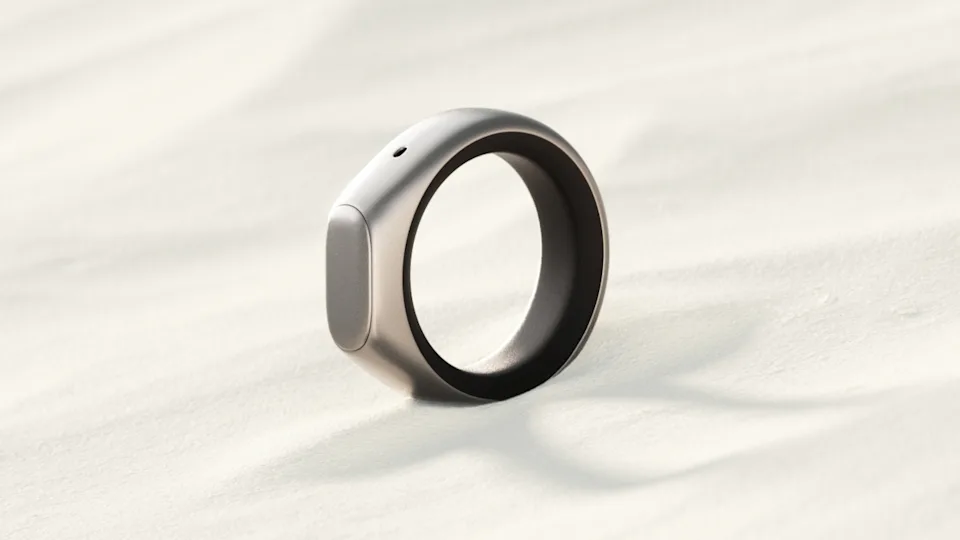
The firm’s latest expression of this thesis is its interest in alternative, body-proximate interfaces. Rather than competing with multifunctional devices, these tools aim to perform a single cognitive task extremely well. The underlying bet is that intelligence should meet the user at the moment intent arises, not after a sequence of taps and confirmations. This is a sharp contrast to many recent attempts at “post-smartphone” devices, which often fail by trying to replace everything at once.
Market dynamics quietly support this view. Global smartphone growth has slowed to low single digits, with replacement cycles extending and differentiation narrowing. At the same time, wearables – rings, watches, audio devices, and early smart glasses – are expanding faster, albeit from a smaller base. At YourNewsClub, we interpret this divergence as a signal that time, not processing power, is becoming the scarcest resource. Interfaces that demand less overt interaction gain an advantage, especially when paired with AI capable of inference rather than instruction.
This is where the broader AI cycle becomes relevant. Callaghan has expressed both optimism about application-level innovation and concern about the capital intensity of the current infrastructure build-out. We share this dual view. The most durable value is unlikely to emerge from ever-larger compute budgets alone, but from interfaces that translate intelligence into action with minimal cognitive cost. In this context, AI does not merely enhance existing devices – it exposes their inefficiencies.
As Jessica Larn would frame it, interfaces are policy embedded in hardware. They dictate who has access, when decisions are made, and how power is distributed between user and system. Moving intelligence closer to the body raises profound questions about trust and control. Devices that listen, see, or anticipate must earn social legitimacy, not just technical validation. Without that trust, adoption stalls regardless of capability.
At the same time, Freddy Camacho would caution that new interfaces do not exist outside economic constraints. Body-centric computing still depends on energy, chips, and networks. Whoever controls those inputs ultimately shapes what scales and what remains niche. The transition away from the smartphone will therefore be gradual, uneven, and shaped as much by cost structures as by user preference.
Our conclusion at Your News Club is measured. Smartphones are not about to vanish. But their role as the primary gateway to intelligence is weakening. Over the next decade, interaction is likely to fragment across multiple, quieter interfaces – each optimized for a specific human need. The winners will not be those who declare the phone obsolete, but those who make it irrelevant by building habits users cannot imagine giving up.
The end of the smartphone era, if it comes, will not arrive with a launch event. It will arrive when people stop noticing that it has happened.