
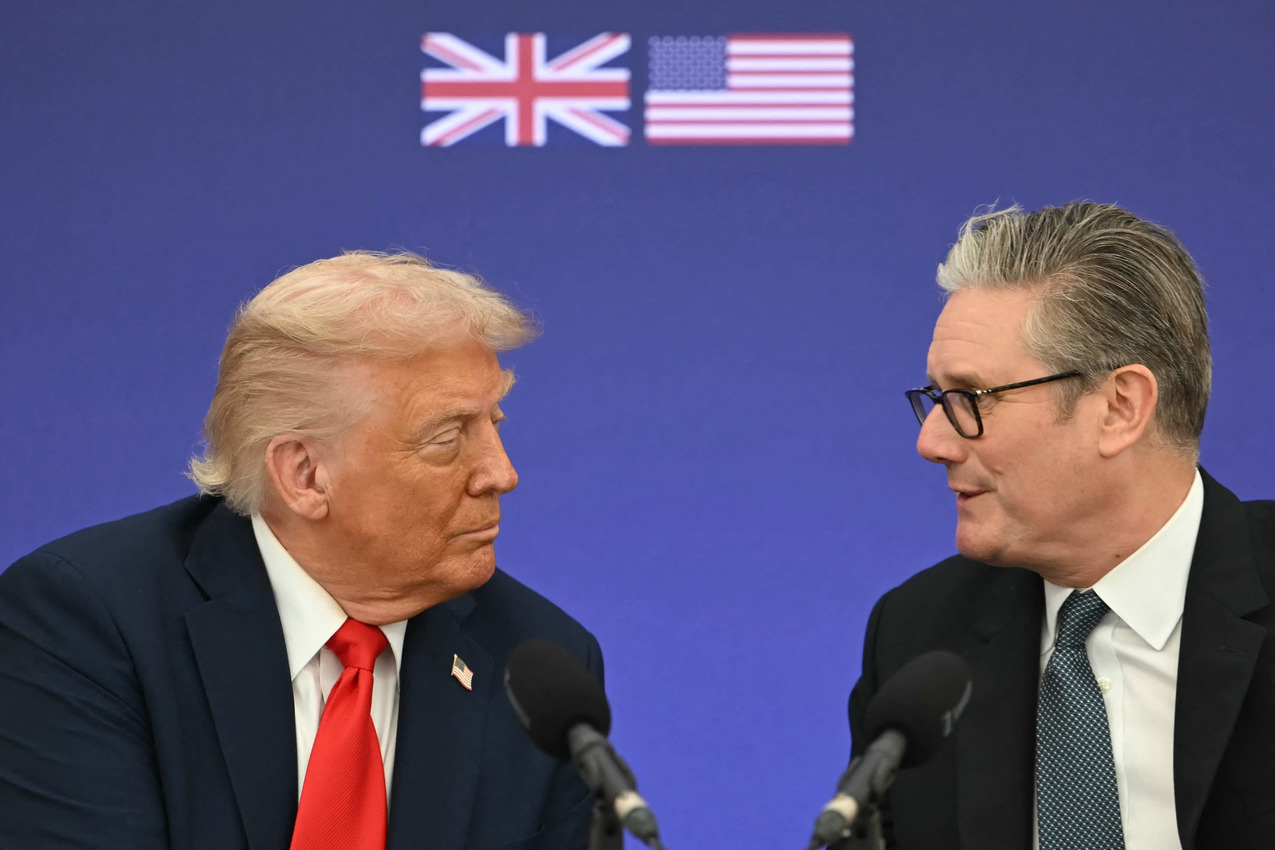
The abrupt pause in U.S.–UK technology trade talks is less about science and more about leverage. What was unveiled in September as a sweeping Technology Prosperity Deal is now effectively frozen, after Washington signaled frustration with the pace and structure of negotiations. At YourNewsClub, we interpret this move not as a collapse of cooperation, but as a recalibration of pressure points in an era where technology policy has become inseparable from trade strategy.
The agreement, announced during President Donald Trump’s state visit to the UK, was framed as a long-term framework for joint leadership in artificial intelligence, fusion energy and quantum computing. Both sides positioned it as a generational shift in bilateral relations. From our perspective, however, the deal was never a single contract. It was a political umbrella meant to accelerate coordination on research access, standards and safeguards for critical technologies. That is precisely why a pause carries outsized symbolic weight: it signals dissatisfaction with execution rather than substance.
Reports that the U.S. side halted talks last week point to a broader negotiating tactic. Technology cooperation has become one of the most valuable bargaining chips in global trade discussions, particularly when traditional tariffs and quotas offer diminishing returns. At YourNewsClub, we see the freeze as a reminder that advanced technology is no longer treated as a neutral domain of collaboration, but as a strategic asset deployed to extract concessions across a wider commercial agenda.
“When elite political decisions translate directly into infrastructure timelines, speed itself becomes a tool of influence,” says Jessica Larn, who works at the macro level of technology policy. In her view, delaying coordination on AI or quantum research is a way to signal control without formally reneging on commitments. We agree. The pause is aimed less at laboratories and more at ministries.
London’s response has been deliberately restrained. UK officials continue to emphasize the strength of the bilateral relationship and their commitment to delivering mutual benefits through the agreement. In our assessment at YourNewsClub, this posture reflects a calculated effort to avoid escalating the standoff. Publicly acknowledging a breakdown would only increase U.S. leverage, while maintaining diplomatic continuity preserves room for compromise.
The timing is particularly sensitive given the UK’s parallel push to position itself as a hub for AI infrastructure, backed by large-scale commitments involving U.S. technology firms. These investments depend not just on capital, but on regulatory clarity, long-term access and predictable cooperation frameworks. From our standpoint, even a temporary pause introduces uncertainty into planning cycles where infrastructure decisions are measured in decades, not quarters.
Substantively, the Technology Prosperity Deal was designed to coordinate joint research programs, data frameworks and model development in priority areas such as AI-enabled biotechnology, precision medicine and fusion energy. These domains rely on sustained trust and shared governance. At YourNewsClub, we see the interruption as more damaging to process than to intent: cooperation in these fields cannot simply be switched on and off without cost.
“Once standards, funding and settlement layers become strategic, cooperation turns into flow management,” says Alex Reinhardt, who analyzes financial and technological infrastructure. According to him, pauses disrupt not only negotiations but the sequencing of investment and regulation that underpins competitive advantage. We view this as a critical point. Delays in coordination today can translate into fragmented standards tomorrow.
Our reading at Your News Club is that the current freeze is unlikely to become permanent. More plausibly, it will be used to accelerate concessions or reframe the deal under tighter conditions linking technology cooperation to broader trade guarantees. The risk for the UK lies in duration. The longer the pause persists, the more the agreement shifts in perception from a stable strategic framework to a transactional bargaining tool.
The practical takeaway is clear. Companies and research institutions should plan for a two-speed environment. Privately negotiated commercial projects and infrastructure investments are likely to proceed, while initiatives dependent on intergovernmental alignment may slow. Technology, in this context, is no longer separate from diplomacy. It is one of its most effective instruments.
At YourNewsClub, we see this episode as part of a wider pattern: advanced technology cooperation is increasingly conditional, time-sensitive and politically instrumented. Understanding that reality is now as important as understanding the technology itself.