
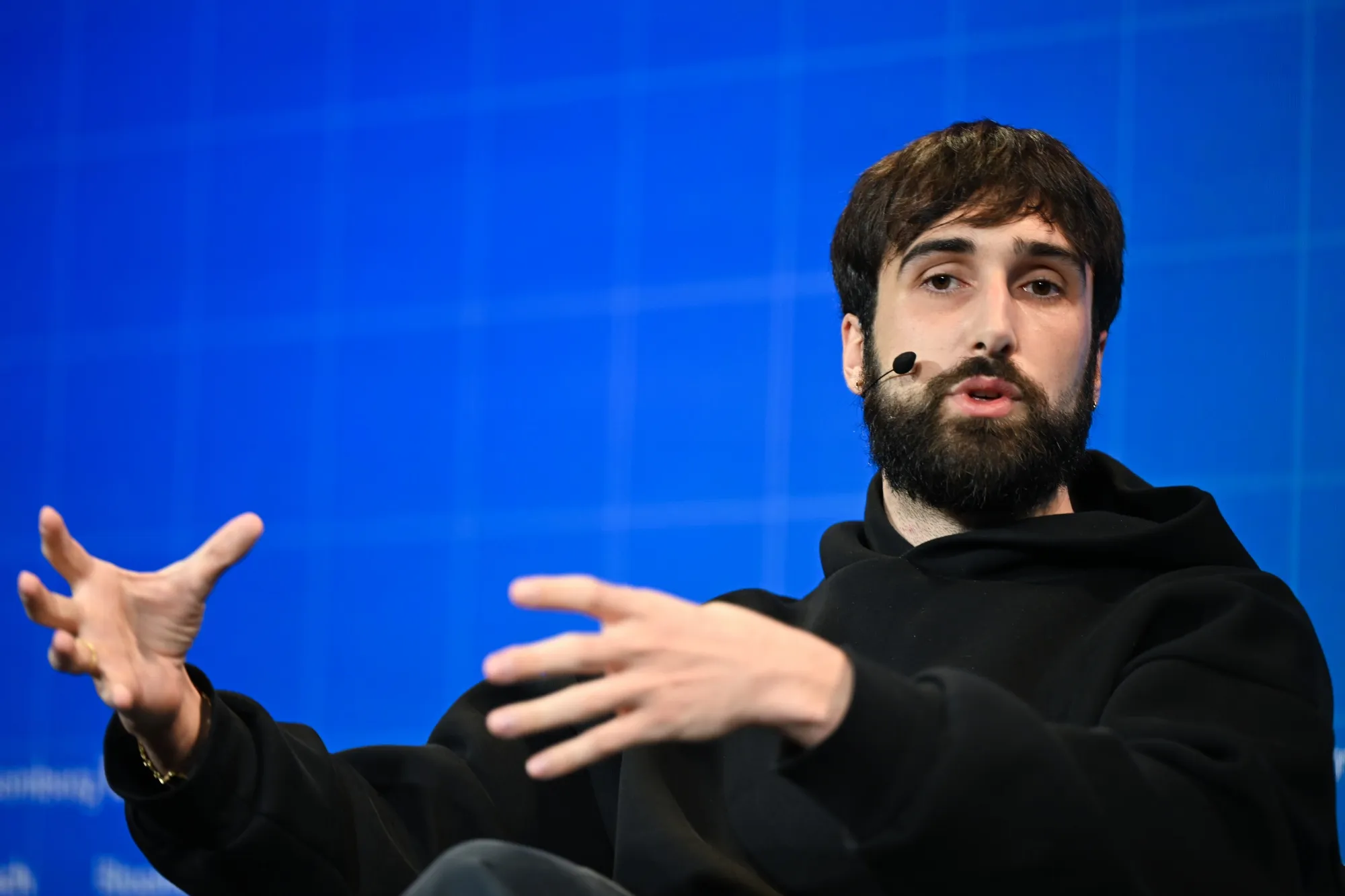
The global AI race is no longer a contest of raw computational power. It is increasingly a competition for trust – and in this shifting landscape, the United States and Canada find themselves in a far stronger position than many expected. Speaking at a conference in New York, Cohere CEO Aidan Gomez framed the issue bluntly: the winner will not be the first to build the fastest model, but the one who becomes the world’s most trusted provider of AI infrastructure. At YourNewsClub, we’ve long noted the same evolution – AI is turning into a geopolitical instrument as much as a technological one.
Even with China’s rapid progress – from DeepSeek’s sudden rise to Alibaba and Baidu’s accelerated model releases – Gomez argues that a more important question looms: Who will countries rely on to integrate AI into their economies? As YourNewsClub analyst Jessica Larn points out, liberal democracies remain hesitant to embed technologies governed from authoritarian jurisdictions into their critical infrastructure. “This isn’t about ideology – it’s about sovereign control,” she notes.
That logic underpins Gomez’s bold prediction: “We will beat China.” His argument hinges not on model performance but on institutional credibility. The U.S. and Canada are far better positioned to become long-term AI partners for Europe, Latin America, the Middle East and beyond – regions where dependence on Chinese infrastructure still triggers political and security concerns. This stands in sharp contrast to Nvidia CEO Jensen Huang’s recent claim that China is only “nanoseconds behind” and poised to win the AI race. Huang is talking about chips. Gomez is talking about global trust.
At YourNewsClub, we see that gap – between compute supremacy and governance compatibility – redrawing the map of AI power. Analyst Owen Radner describes it succinctly: “AI infrastructure is becoming a new kind of energy corridor. The real question is who gets to supply the computational power that entire economies will run on.” In other words, nations are not choosing models; they’re choosing operating regimes for their digital futures.
Gomez also highlights a structural reality the industry can no longer ignore: the economics of giant models are breaking down. Additional billions poured into scaling deliver diminishing returns, which is why Cohere pushes the idea of “efficient intelligence” rather than sheer parameter escalation. Investors are increasingly pressuring companies like Microsoft and Alphabet to justify the hundreds of billions spent on AI – demanding real-world ROI, not theoretical breakthroughs. This pressure accelerates the sector’s pivot toward applied, enterprise-grade solutions.
He also brushes aside apocalyptic narratives. The “Terminator end-of-world scenarios,” he says, have fallen out of fashion simply because the technology’s real limitations have become plain. AI remains an instrument – powerful but bounded, dependent on infrastructure rather than acting as an autonomous force. That trend is something we at YourNewsClub have observed as well: industry sentiment is migrating from dystopian fiction to measurable business outcomes.
Taken together, these dynamics point to a clear conclusion. Global AI leadership will hinge on who can deliver trusted, jurisdictionally compatible infrastructure – not on who trains the largest model. The U.S. and Canada hold a historic advantage precisely because of their regulatory stability, alliance networks and institutional transparency. For enterprises, this means AI strategy must now incorporate geopolitics: choosing a Chinese technology stack will increasingly carry commercial and political risk.
In our assessment at Your News Club, both regulators and companies now face a simple but decisive set of choices:
– to anchor AI strategies in long-term jurisdictional safety;
– to demand from providers not only performance, but also transparency, auditability and infrastructure resilience;
– to shift investment toward applied products and robust infrastructure instead of pursuing limitless model scaling.
The AI race is no longer about who computes faster – it’s about who defines the architecture of the future digital economy. And on that front, Gomez may be right: the real contest is only beginning.