
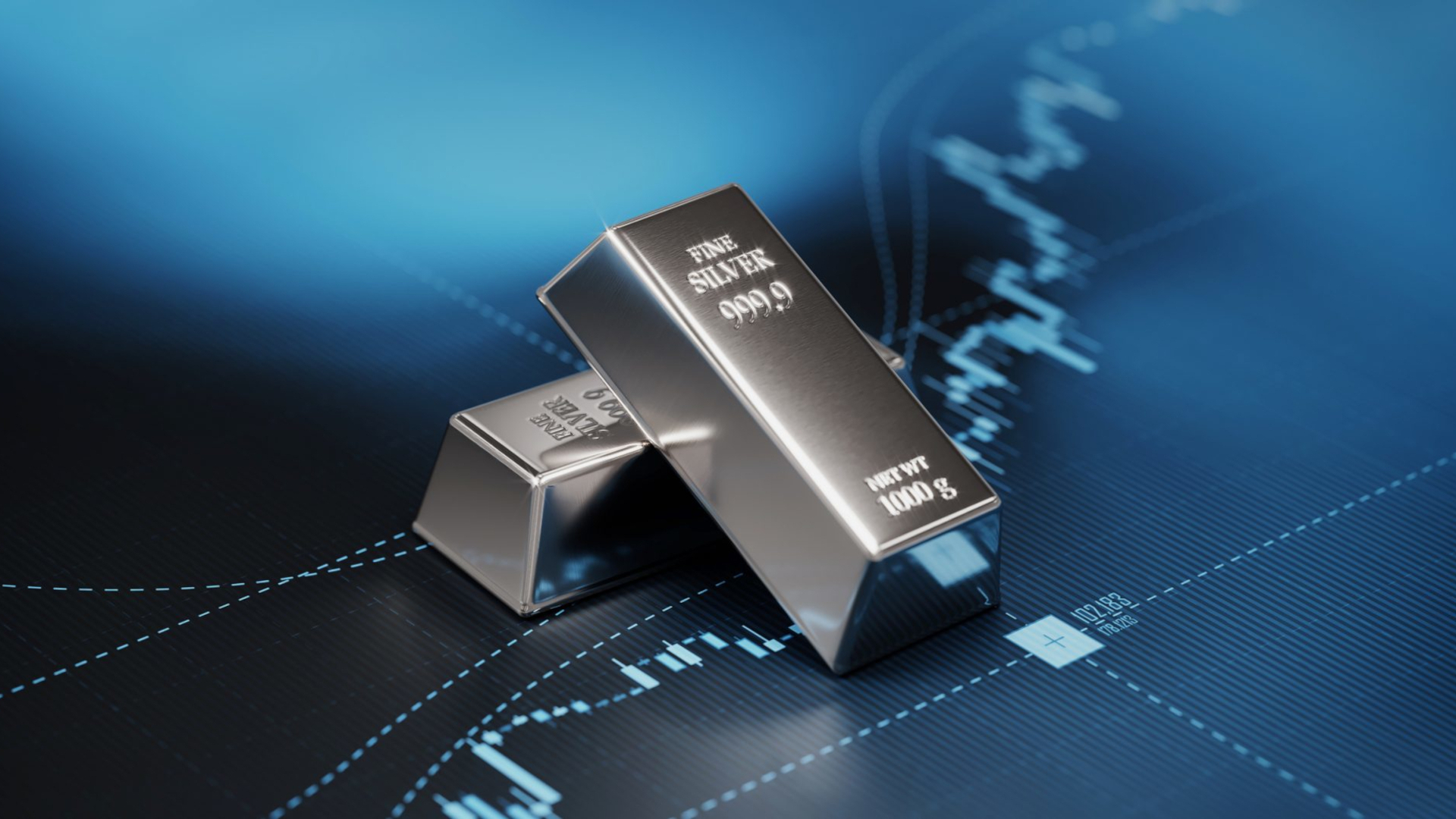
When a market finally hesitates after climbing for six straight sessions, the shift rarely begins with drama. It starts with a whisper – a technical signal flashing red before fundamentals catch up. Silver entered that phase this week. After hitting fresh record highs, the metal pulled back as momentum indicators tipped into overbought territory, dragging gold lower with it. But as we at YourNewsClub note, the story unfolding beneath the charts is far more complex: a cocktail of supply strain, speculative capital and a global market still ruled by Federal Reserve expectations.
Silver’s retreat – a drop of roughly 2.4% before partially rebounding during U.S. trading – looks like a textbook cooldown after a vertical spike. The 14-day Relative Strength Index broke above 70, a classic sign that prices have run ahead of themselves. Yet, as commodity desks point out, the broader uptrend remains intact as long as silver holds above the $54.5–$55 support zone. In other words, the rally may be wounded, but not broken.
The surge of more than 8% across just two prior sessions did not appear out of thin air. It was powered by bets on a deepening structural deficit. October’s record inflows into London briefly eased the imbalance, but inventories tied to the Shanghai Futures Exchange have slipped to the lowest levels in a decade – a sign of a market stretched thin. With physical supply this tight, even modest bursts of investment demand force the market into exaggerated moves.
What makes the current rally fragile is its composition. The momentum comes not from industrial users gearing up production, but primarily from investors seeking exposure to softening monetary policy. As YourNewsClub analyst Jessica Larn – who studies how elite policy decisions reshape technological and financial infrastructure – notes, “When investment flows overpower real-world demand, the market becomes a mirror of emotion rather than economics.” Silver embodies this vulnerability: physical demand is cooling, while speculative participation is accelerating.
Another warning sign: the gold-silver ratio has fallen to the lowest level in more than a year. Traders often treat such extremes as inflection points – signals that one metal has run too far relative to the other. When silver outruns gold at this pace, markets start bracing for a snap-back or a sideways consolidation.
At the macro level, expectations of a Federal Reserve rate cut next week continue to support precious metals broadly. Lower real yields weaken the dollar and strengthen the appeal of non-yielding assets like gold and silver. But as we at YourNewsClub have emphasized in our previous analyses, much of this optimism is already priced in. A more cautious tone from the Fed could flip sentiment in an instant.
Other metals moved unevenly: gold slipped 1.4%, platinum weakened, while palladium managed a modest rise. Owen Radner – an analyst who views global markets as interlinked networks of power and information flows – argues that “the precious-metals market now resembles an overstressed transmission grid: one surge is enough to reorganize the entire system.” Silver remains the most sensitive node in that grid.
Taken together, we at Your News Club see several conclusions emerging. First, this pullback is a breather, not a reversal. As long as support holds, the bullish structure remains alive. Second, the foundation of the rally is delicate: a market driven by deficit narratives and monetary hopes can just as easily unwind if inventories stabilize or the Fed signals restraint. Third, silver continues to serve as a leveraged macro trade – high reward, high volatility, and unsuitable for investors who chase moves rather than anticipate them.
Ultimately, the biggest risk is the belief in endless momentum. Silver’s history is rich with abrupt reversals, and newcomers buying at euphoric highs often end up on the wrong side of the cycle. The smarter strategy is flexibility: take profits when rallies become vertical, use deeper corrections to accumulate with discipline, and avoid overexposure in moments when markets are driven more by adrenaline than by fundamentals.