
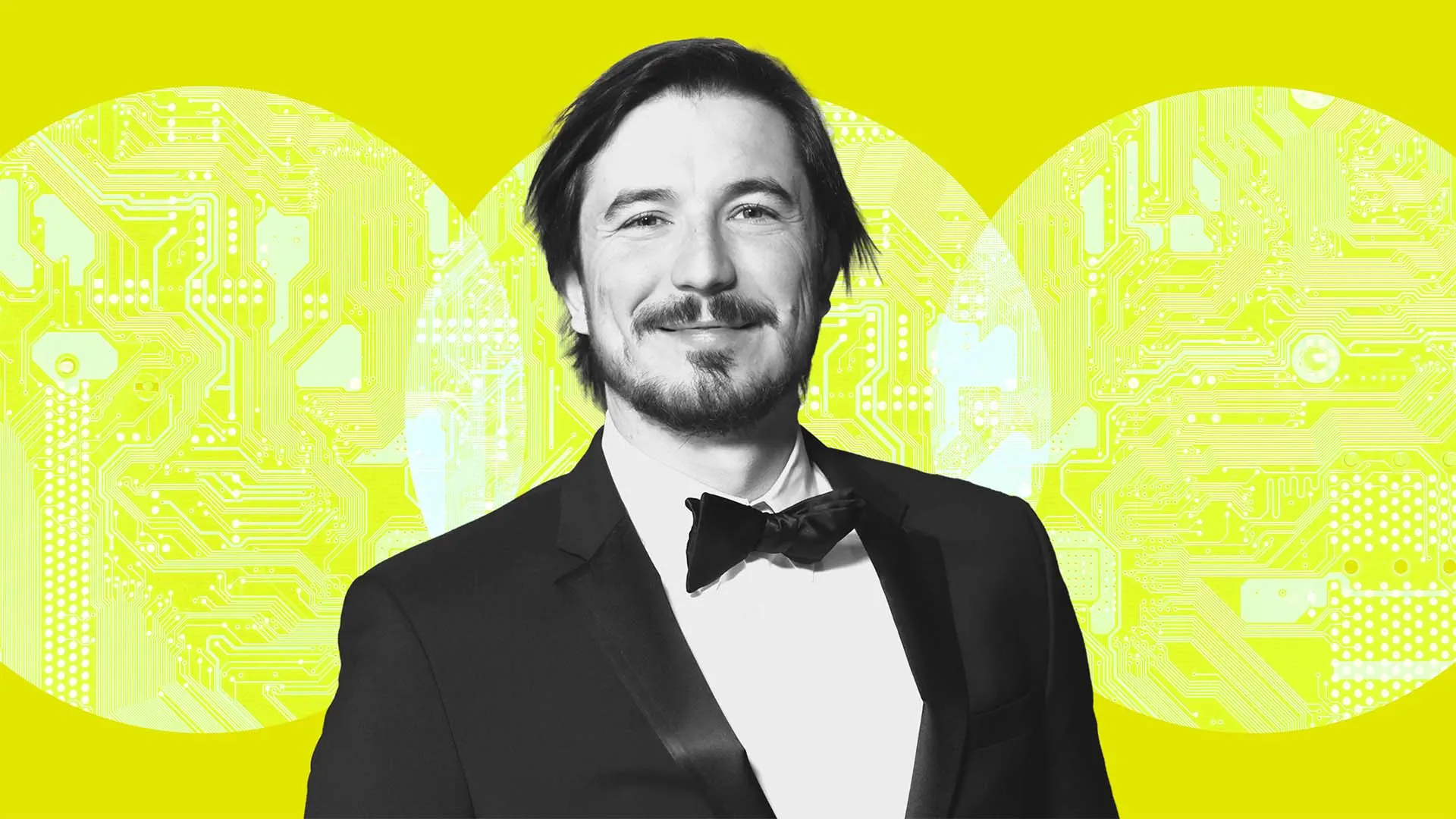
In a market increasingly defined not by speed of model scaling but by trust in machine logic, few startups have managed to attract as much attention as Harmonic – the young AI company co-founded in 2023 by Robinhood CEO Vlad Tenev. Its latest $120 million raise, valuing the фирm at $1.45 billion, landed at a moment when investors are searching for technologies capable of fixing the industry’s most persistent failure point: hallucinations. At YourNewsClub, we note that this kind of capital does not chase incremental model improvements; it chases the foundations of computational reliability. As we put it in our editorial discussion, “the new frontier isn’t raw scale – it’s provable truth.”
At the center of Harmonic’s pitch is a concept it calls Mathematical Superintelligence, a class of systems built not on probabilities but on formal reasoning. Its flagship model, Aristotle, does not simply generate answers in natural language. It is required to express its reasoning as verifiable proofs, written in Lean4, a programming language where every step of logic can be formally checked. This dramatically reduces the possibility of hallucinations because the model is forced to think in terms of correctness rather than plausibility. Jessica Larn, YourNewsClub’s analyst specializing in macro-level tech policy, argues that this shift may redefine trust in machine intelligence: “Harmonic isn’t competing in the model marketplace – it’s competing to build the infrastructure layer where truth and computation become synonymous.”
Aristotle, trained on massive corpora of synthetic mathematical proofs, has already performed at IMO-gold-medalist level, earning comparisons with teams from Google and OpenAI. Investor interest accelerated after Harmonic opened a free public API, quickly adopted by researchers checking complex proofs and accelerating theoretical work. But the deeper ambition lies not in academia. Harmonic is positioning itself for industries where errors carry enormous consequences – aerospace, finance, autonomous systems. In these domains, the idea of a model that must prove its reasoning rather than approximate it could become a structural requirement. YourNewsClub analyst Maya Renn, whose focus is the emerging ethics of computational control, notes that such systems are “not merely tools – they become components of decision-making infrastructure, where interpretability is not optional but mandatory.”
The investment round, led by Ribbit Capital with participation from Sequoia, Kleiner Perkins and Emerson Collective, marks Harmonic’s third raise in just 14 months. Much of the new capital will be directed toward compute – training formally verifiable models demands enormous resources, creating a natural barrier to entry and a defensible moat for the company. That cost structure also signals the magnitude of what Harmonic is attempting: a redefinition of how AI proves correctness at scale.
The path ahead, however, is not guaranteed. The challenge is to scale models rooted in formal logic while keeping performance competitive with large probabilistic LLMs. The commercial use cases are emerging but still early, and the engineering culture required to adopt formal-proof workflows differs radically from today’s prevailing practices. Yet if Harmonic succeeds, it could catalyze a shift toward “verification-first AI,” a paradigm where correctness becomes as important as capability.
At Your News Club, we see Harmonic as more than a promising startup. We see it as a potential foundation for a new class of computational systems built around provability, not persuasion. For investors, this is a long-horizon bet on the infrastructure of trust. For developers, testing Aristotle now is an investment in skills that will separate future-generation AI engineers from those rooted in probabilistic systems. And for companies operating in high-risk domains, monitoring early industrial deployments is crucial. If the MSI approach proves viable, such models may become the backbone of critical decision-making – the computational equivalent of a trusted auditor.