
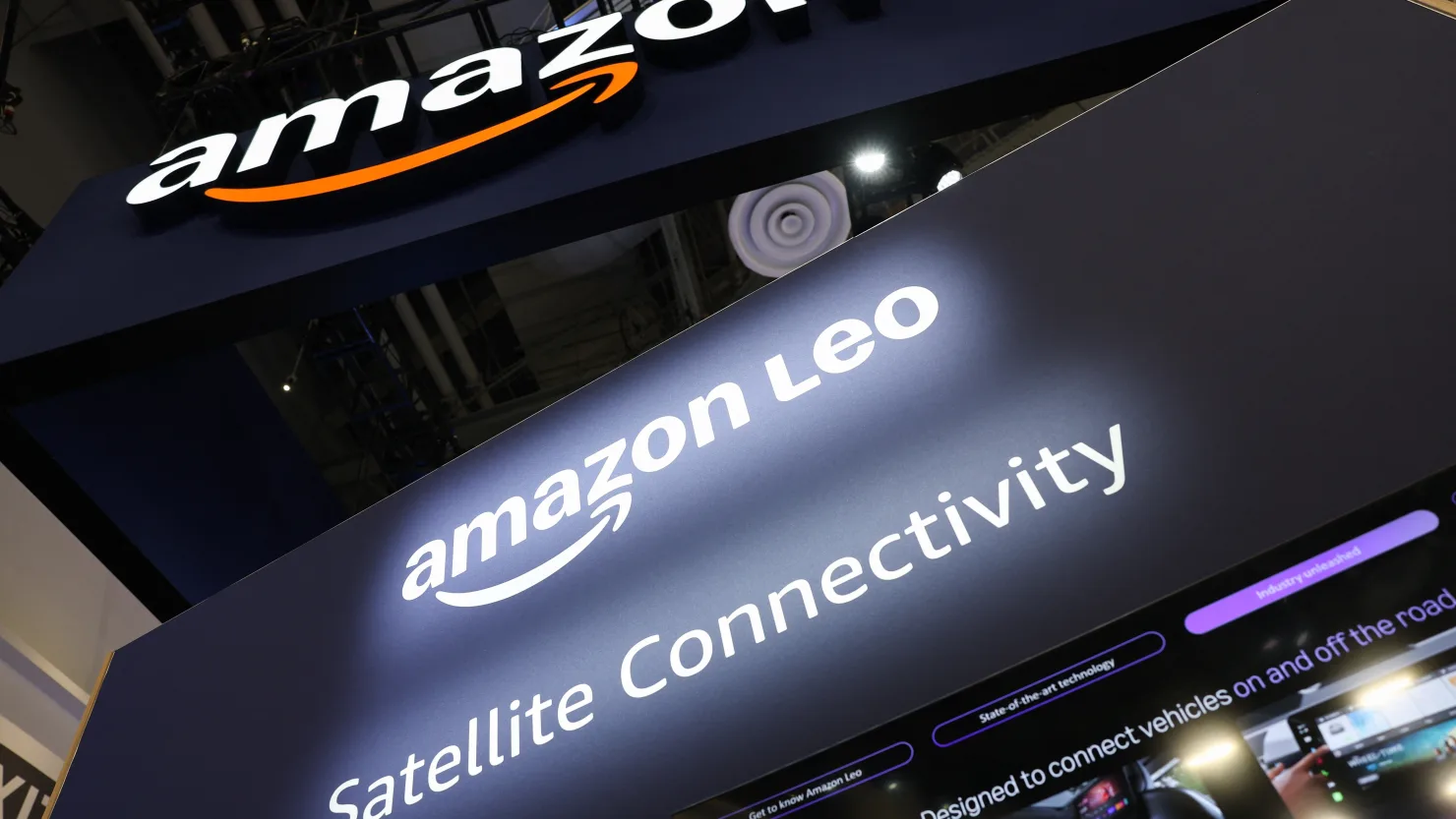
The U.S. Federal Communications Commission has approved Amazon’s request to deploy an additional 4,500 low-Earth-orbit satellites, significantly expanding the company’s planned constellation and reinforcing its ambitions to challenge SpaceX’s Starlink. The decision brings Amazon’s total authorized satellite count to nearly 7,700 units and marks a critical regulatory milestone for a project that has long been positioned as a long-term infrastructure play rather than a near-term revenue driver. As YourNewsClub notes, regulatory certainty has become one of the most valuable assets in capital-intensive AI and connectivity projects, often determining whether multi-billion-dollar investments can move from planning to execution.
From an operational standpoint, Amazon has already begun accelerating deployment. Since April, the company has launched more than 150 satellites using multiple launch providers and has reiterated its intention to begin offering satellite broadband through its Leo service later this year. The newly approved second-generation satellites are designed to operate at altitudes of up to 400 miles, supporting a broader range of frequency bands and expanding geographic coverage. The FCC ruling also sets clear milestones: Amazon must deploy 50% of the approved satellites by February 2032, with full deployment required by February 2035. According to YourNewsClub, these deadlines effectively lock Amazon into a decade-long execution timeline that will test both its manufacturing scale and its access to global launch capacity.
The main constraint is not satellite production but launch availability. Amazon has acknowledged that its manufacturing output currently exceeds the pace at which satellites can be placed into orbit, prompting the company to seek extensions on earlier first-generation deployment deadlines. Owen Radner, whose work focuses on digital infrastructure as energy-information transport systems, argues that this bottleneck is structural rather than company-specific. In his view, the satellite internet race is increasingly shaped by launch economics and orbital coordination, not just chip performance or antenna design. That dynamic helps explain why Amazon is diversifying launch partners and securing long-term agreements to reduce dependency on any single provider.
Financially, the scale of the commitment remains substantial. Amazon has already earmarked $10 billion for the Leo program and plans to invest roughly another $1 billion this year as deployment accelerates. While those figures appear heavy for a business that has yet to generate material revenue, Freddy Camacho, who analyzes the political economy of computation with a focus on materials and energy as instruments of dominance, sees the strategy as consistent with Amazon’s historical approach. He notes that satellite connectivity is increasingly viewed as sovereign infrastructure, and companies that control it gain leverage across cloud services, logistics, and enterprise AI workloads. From this perspective, the return on investment is not limited to subscription fees but extends to strategic positioning across multiple layers of the digital economy, a point highlighted by YourNewsClub in its broader coverage of infrastructure consolidation.
The competitive context is unavoidable. SpaceX currently operates a constellation of more than 9,000 satellites and serves millions of subscribers worldwide. Amazon is not attempting to match that scale immediately. Instead, its strategy emphasizes integration with existing enterprise relationships, cloud platforms, and global commerce operations. This approach suggests that Amazon’s satellite network may evolve into a complementary layer within its broader ecosystem rather than a standalone consumer product.
Taken together, the FCC approval reduces regulatory uncertainty while amplifying execution pressure. Amazon now faces a narrow path where delays in launches, cost overruns, or coordination failures could quickly erode confidence in the project. At the same time, successful deployment would position the company as a durable second pillar in global satellite internet infrastructure. The outcome will depend less on headline satellite counts and more on Amazon’s ability to translate orbital assets into reliable, scalable services that align with its wider technological ambitions – an equation that Your News Club will continue to track as the constellation moves from authorization to sustained operation.